
The Solo 401(k) is a powerful retirement plan option, especially for self-employed individuals and owner-only businesses. It offers high contribution limits, flexible investment options, and even the ability to take loans from your plan. But despite its benefits, not everyone is eligible to open a Solo 401(k).
Let’s break down who cannot open a Solo 401(k) and what alternative options might be available.
Ineligible Individuals: Who Does Not Qualify for a Solo 401(k)?
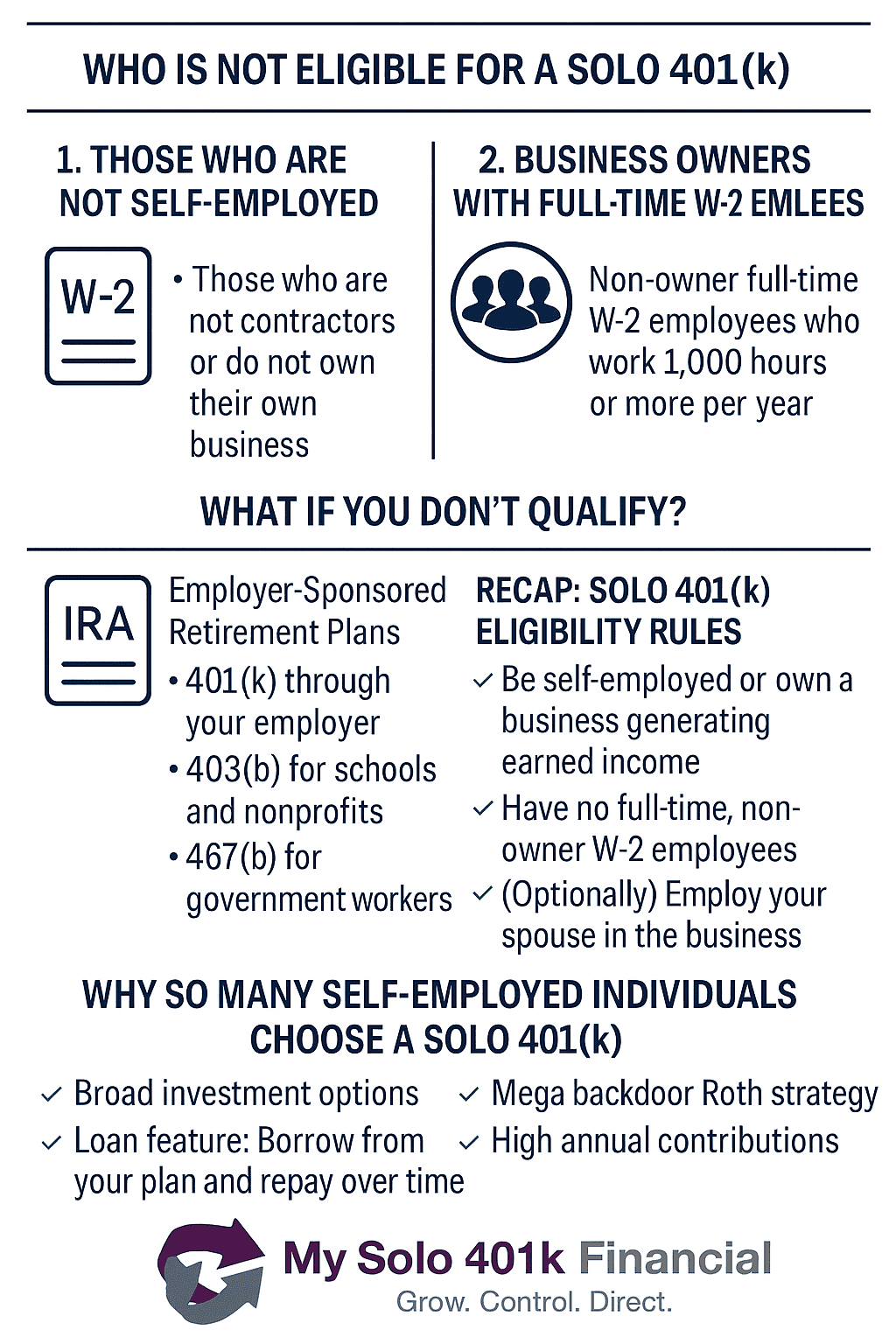
To open a Solo 401(k), two primary conditions must be met:
-
You must have self-employment income
-
You cannot employ full-time, non-owner W-2 employees (excluding your spouse)
Here’s who does not qualify:
1. Those Who Are Not Self-Employed
If you work for an employer and do not own the business, you are not eligible to open a Solo 401(k). This includes:
-
Employees of private companies
-
Government workers
-
Teachers and hospital staff (unless they also have self-employment income)
2. Business Owners with Full-Time Employees
Even if you are self-employed or own your business, you cannot open a Solo 401(k) if your business employs full-time, non-owner W-2 employees who work 1,000 hours or more per year.
These individuals are referred to as common-law employees, and their presence disqualifies the business from offering a Solo 401(k).
What Are Your Alternatives?
If you are ineligible to open a Solo 401(k), don’t worry—there are still retirement savings options available:
-
Traditional IRA or Roth IRA: You do not need to be self-employed to open these accounts. Contributions are based on your earned income from an employer.
-
Employer-Sponsored Retirement Plans:
-
401(k) through your daytime employer
-
403(b) for employees of schools and non-profits
-
457(b) for government workers
-
Thrift Savings Plan (TSP) for federal employees
-
These plans can still help you build a secure retirement even if you don’t qualify for a Solo 401(k).
Who Can Open a Solo 401(k)?
To clarify, here are the basic eligibility requirements:
-
Must have self-employment income
-
Cannot have any full-time, non-owner W-2 employees
-
Spouses who work in the business can also participate (even if they’re not owners)
Bonus: Why the Solo 401(k) Is So Popular
For those who qualify, the Solo 401(k) offers several standout features:
-
High Contribution Limits: Up to $70,000 in 2025, plus $7,500 catch-up if age 50+, or $11,250 if between ages 60–63
-
Loan Option: Borrow from your Solo 401(k) without penalty (as long as it’s repaid on time)
-
Alternative Investments: Invest in real estate, crypto, private placements, and more
-
Account Consolidation: Roll over IRAs and former employer plans into your Solo 401(k)
Final Thoughts
While the Solo 401(k) is a powerful retirement tool, it’s not for everyone. If you’re not self-employed or if you have full-time employees, you’ll need to explore other retirement planning options. But for those who do qualify, the Solo 401(k) can be one of the most flexible and high-contribution retirement plans available. Visit here to learn more about the solo 401k eligibility requirements.