
If you’re self-employed and exploring retirement savings options, the Solo 401(k) stands out for its flexibility and high contribution limits. However, understanding the different types of Solo 401(k) plans—and the fees that come with them—is essential for making an informed decision.
When opening a Solo 401(k), understanding the fee structure is essential. Whether you’re considering a brokerage-based plan or a fully self-directed option, the costs — and benefits — can vary significantly. This guide breaks down the three main types of Solo 401(k) plans and their associated fees.
🔹 1. Brokerage-Based “Vanilla” Solo 401(k)
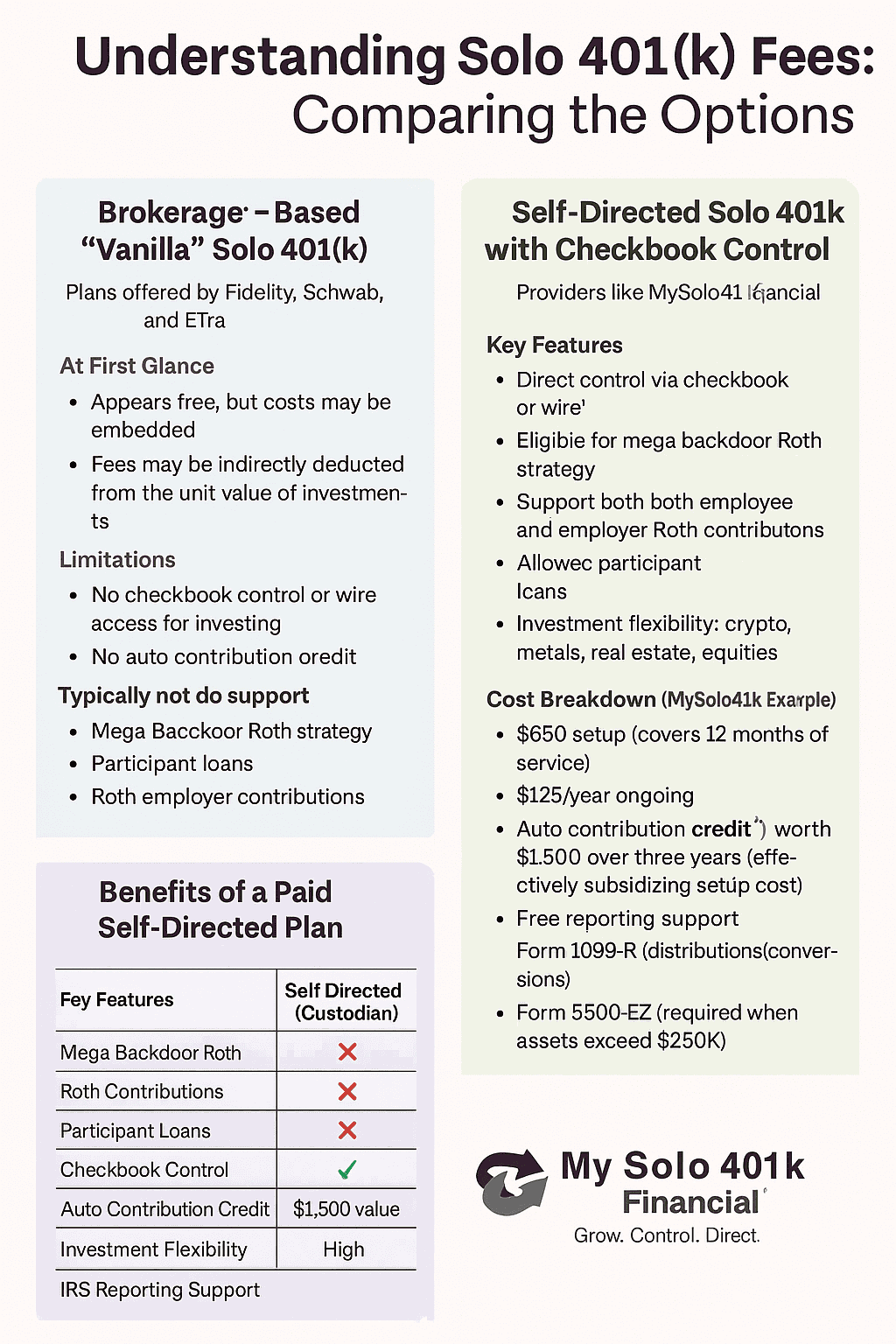
These plans are commonly offered by major financial institutions such as Fidelity, Schwab, and E-Trade. They often appear free at first glance, which is why they are frequently referred to as “vanilla” Solo 401(k)s.
While no upfront setup fees are usually charged, costs may still exist behind the scenes. Many brokerage firms deduct fees indirectly from the unit value of your investments. This means you won’t see the fees on your statements, but they still reduce your investment returns over time.
At First Glance:
-
Appears free, but costs may be embedded.
-
Fees may be indirectly deducted from the unit value of investments.
Limitations:
-
No checkbook control or wire access for investing.
-
No auto contribution credit.
-
Typically do not support:
-
Mega Backdoor Roth strategy
-
Participant loans
-
Roth employer contributions
-
🔹 2. Self-Directed Solo 401(k) with Custodian
This version of the Solo 401(k) is offered by trust companies that act as custodians for your retirement assets. These plans offer more investment flexibility than brokerage-based plans.
However, they come with a variety of fees.
Fee Structure:
-
Setup fee
-
Ongoing custodian fees (for safekeeping investments like crypto, real estate, or metals)
-
No auto contribution credit
While more flexible than brokerage plans, these custodian-managed accounts can be costly and do not provide the same level of control as plans with checkbook access.
Use Case:
-
Ideal for investors who prefer a custodian managing the assets but want more flexibility than a brokerage plan.
🔹 3. Self-Directed Solo 401(k) with Checkbook Control
This is the most flexible and feature-rich Solo 401(k) option available. Providers like MySolo401k Financial offer these plans, which empower you with full investment control through checkbook or wire access.
Popular among experienced investors who want maximum flexibility.
Key benefits include:
-
Direct investment control, allowing you to invest in real estate, cryptocurrencies, precious metals, and more.
-
Eligibility for the mega backdoor Roth strategy, enabling after-tax contributions that can be converted to Roth.
-
The ability to make both employee and employer Roth contributions.
-
Access to participant loans.
-
The option to choose where to hold your funds, including at local banks or credit unions.
Cost Breakdown (MySolo401k Example):
-
$650 setup ($525 +$125) (covers first 12 months of service)
-
$125 annual fee thereafter
-
Auto contribution credit worth $1,500 over three years (effectively subsidizing setup cost)
-
Free preparation of IRS-required forms, including:
-
Form 1099-R for distributions and Roth conversions.
-
Form 5500-EZ, required when plan assets exceed $250,000, and/or at plan termination regardless of asset value.
-
✅ Solo 401k Plan Types
| Feature | Brokerage Plan | Self-Directed (Custodian) | Self-Directed (Checkbook) |
|---|---|---|---|
| Mega Backdoor Roth | ❌ | ❌ | ✅ |
| Roth Contributions | Limited | Limited | ✅ |
| Participant Loans | ❌ | Limited | ✅ |
| Checkbook Control | ❌ | ❌ | ✅ |
| Auto Contribution Credit | ❌ | ❌ | ✅ ($1,500 value) |
| Investment Flexibility | Limited | High | Very High |
| IRS Reporting Support | Limited | Some | ✅ |
Final Thoughts
Each Solo 401(k) plan type has its pros and cons, but for those seeking full control, flexibility, and comprehensive support, the self-directed Solo 401(k) with checkbook control stands out. The inclusion of the $1,500 auto contribution credit and built-in IRS reporting support can significantly reduce costs over time.
Before choosing a plan, make sure you qualify by being self-employed with no full-time W-2 employees (excluding owners). Whether your focus is tax deductions, Roth growth, or investment diversity, there’s a Solo 401(k) solution to match your financial goals.