

Opening a Solo 401(k) is one of the smartest moves a self-employed individual can make to secure their retirement. But how does the process work? What steps are required? And what makes one provider better than another?
This post walks you through the full Solo 401(k) opening process and outlines the benefits of using a specialized provider.
Who Qualifies for a Solo 401(k)?
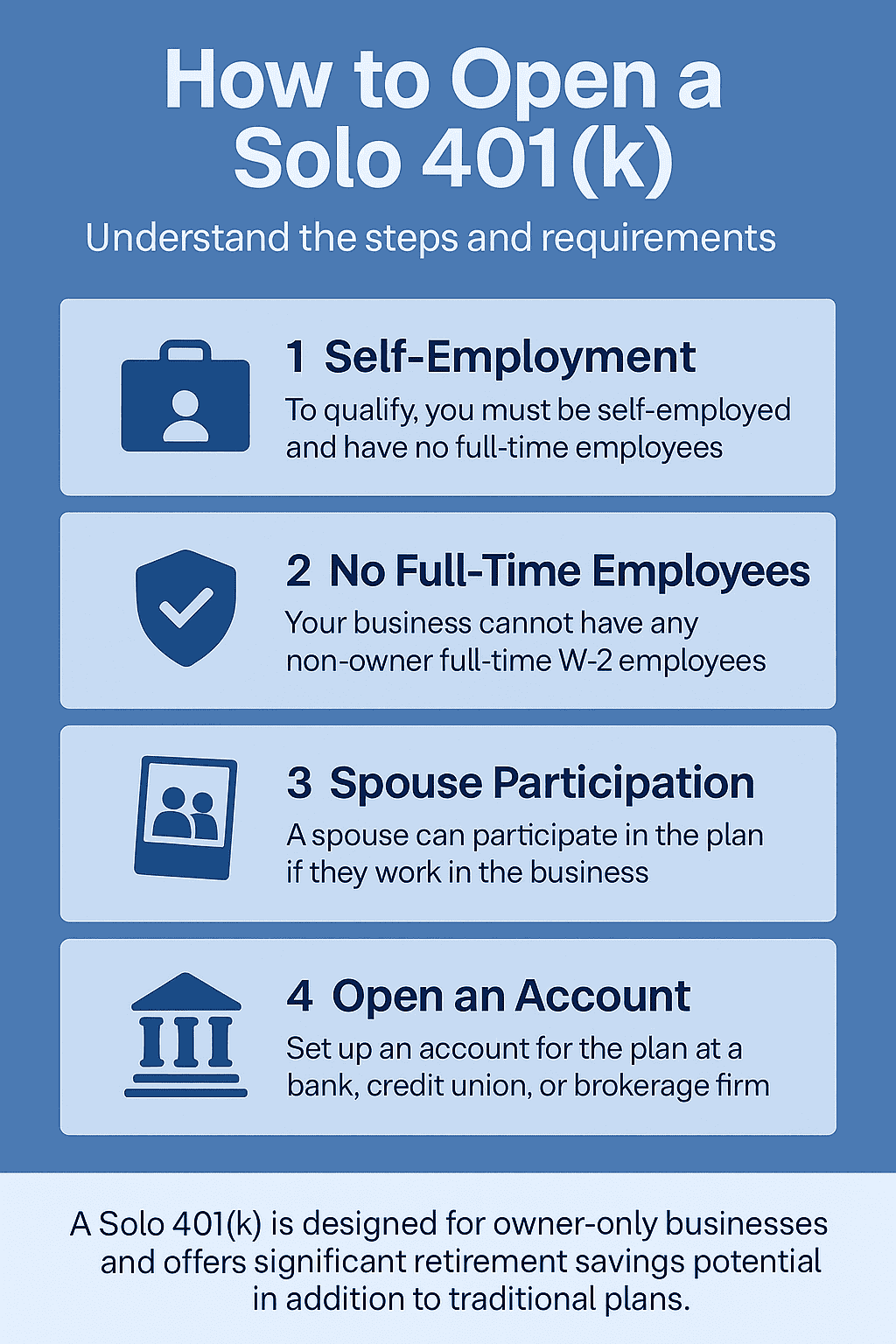
To open a Solo 401(k), you must:
- Be self-employed or own a business
- Have no full-time W-2 employees (except your spouse)
Your spouse does not need to be an owner, but they must work in the business to participate. Spouses can also be named as co-trustees.
Step-by-Step: The Solo 401(k) Opening Process
Step 1: Choose a Provider
Choose a Solo 401(k) provider based on the level of service, investment flexibility, and compliance support. For example, providers like My Solo 401k Financial offer a full-service, self-directed plan with checkbook control.
Step 2: Complete the Online Application
You’ll need to provide basic business and participant details. This information is used to draft your legally binding plan documents, including:
- Trust agreement
- Adoption agreement
- Basic plan document
- Summary Plan Description
Once these documents are signed, your Solo 401(k) plan is officially established.
Step 3: Open Holding Accounts
Open Solo 401(k) bank and/or brokerage accounts in the name of the plan. You can choose where to hold the funds—your local bank, credit union, or a brokerage like Fidelity or Schwab.
Crypto investors can also open accounts on exchanges like Kraken or Gemini under the Solo 401(k).
Step 4: Fund the Plan
You can begin funding your Solo 401(k) with contributions, rollovers from IRAs or old 401(k)s, or both. Contributions for a prior tax year can still be made up to your business tax return deadline plus extensions.
Key Benefits of a Full-Service Provider
1. IRS Compliance Support
Top providers handle critical compliance reporting:
- Form 1099-R for distributions and Roth conversions
- Form 5500-EZ when plan assets exceed $250,000
These are filed electronically at no additional cost if you notify the provider.
2. Checkbook Control
You retain direct access to plan funds and can invest in:
- Real estate
- Precious metals
- Private lending (promissory notes)
- Cryptocurrency
3. Mega Backdoor Roth Strategy
Some providers support voluntary after-tax contributions and in-plan Roth conversions, enabling the Mega Backdoor Roth Solo 401(k).
4. Auto Contribution Credit
New and updated plans from eligible providers may qualify for the $1,500 Auto Contribution Credit over three years:
- $500 per year on your business tax return
- No contribution is required to claim the credit
Restating or Rolling Over an Existing Plan
Already have a Solo 401(k)? You can restate it with a new provider like My Solo 401k Financial. This keeps your plan open while adding new features like Roth options, participant loans, and updated compliance tools. No final Form 5500-EZ or 1099-R is required for restatement.
Final Thoughts
Opening a Solo 401(k) is a straightforward process when you work with the right provider. Look for services that include:
- Legal plan document preparation
- IRS compliance reporting
- Checkbook control for full investment flexibility
- Roth, after-tax, and loan features
- Auto Contribution Credit eligibility
Tip: Choose a provider that allows you to self-direct your investments and supports the Mega Backdoor Roth strategy.
Whether you’re just starting your self-employment journey or consolidating old accounts, a Solo 401(k) offers powerful tax and retirement benefits tailored for solopreneurs.




